For years, electric vehicle marketing has focused heavily on range. Bigger numbers promised freedom, confidence, and fewer compromises. Yet as EV adoption matures, real-world ownership experience tells a different story. For most drivers, charging speed now plays a more decisive role than maximum range in determining daily convenience, travel flexibility, and long-term satisfaction.
After extensive real-world testing and observing owner behavior across different markets, it becomes clear that how fast and reliably an EV charges often matters more than how far it can theoretically drive on a single charge.
Daily Driving Rarely Uses Full Range
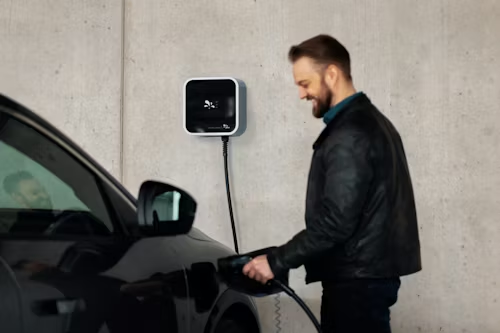
The average daily commute consumes only a fraction of an EV’s total battery capacity. For most owners, even a modest-range electric vehicle easily covers daily errands, commuting, and short trips without approaching range limits. Charging happens at home or at work, where convenience and consistency outweigh raw distance capability.
In this context, ultra-long range becomes excess capacity rather than a necessity. What matters instead is how quickly the battery can recover usable energy when needed, especially between trips or during unexpected schedule changes.
Charging Speed Shapes Real-World Freedom
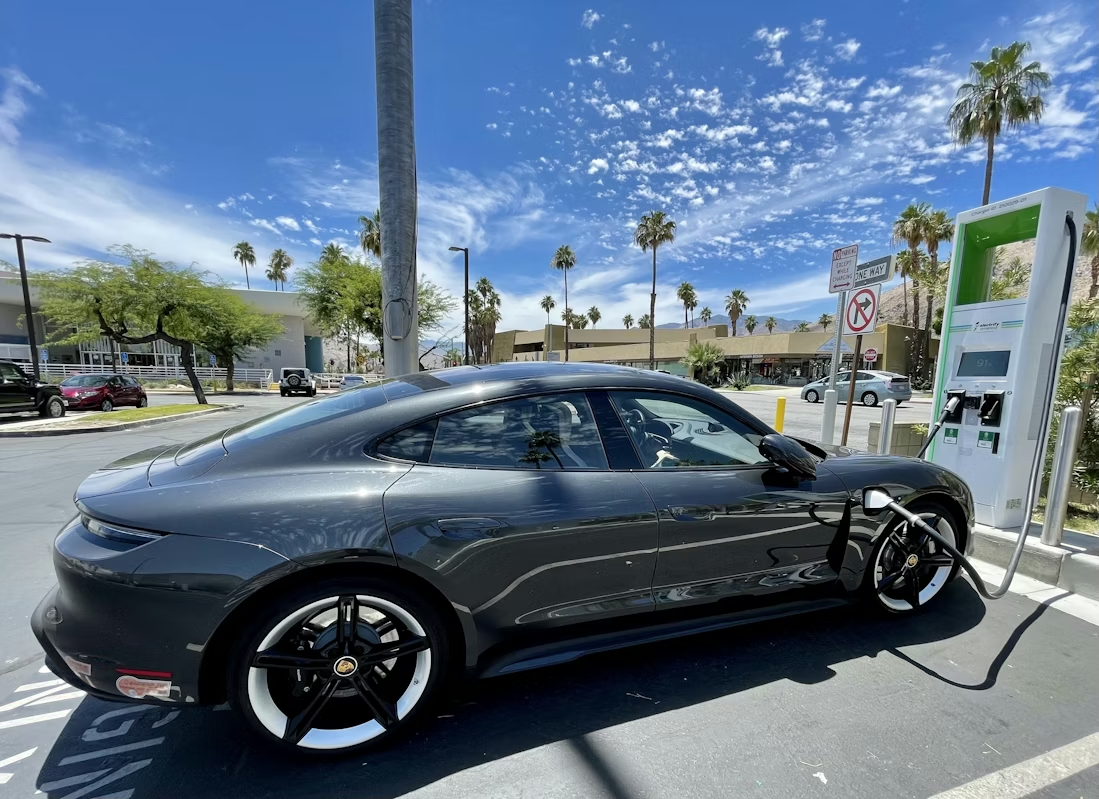
Charging speed directly determines how flexible an EV feels. A vehicle that can add meaningful range in 15 to 20 minutes enables spontaneous decisions and stress-free travel. Fast charging turns brief stops into productive breaks rather than long interruptions.
Even vehicles with slightly lower total range can feel more capable if they charge quickly and consistently. In contrast, a long-range EV with slow or unstable charging performance can feel restrictive on road trips, forcing drivers to wait longer or plan stops more carefully.
Real-world freedom comes from minimizing downtime, not maximizing stored energy.
Charging Curves Matter More Than Peak Numbers
Manufacturers often advertise peak charging speeds, but real-world charging experience depends on the entire charging curve. A car that briefly hits a high kilowatt figure but quickly slows down may spend more total time charging than a vehicle with a lower peak but sustained speed.
Modern EV buyers increasingly recognize this difference. Smooth, predictable charging behavior reduces frustration and makes long-distance travel easier to plan. Consistent performance across a wide battery percentage range often outweighs impressive but short-lived peaks.
Infrastructure Availability Amplifies Charging Speed Importance
Public charging infrastructure remains uneven across regions. In many areas, charging stations are available but limited in number or shared among multiple users. Faster charging reduces wait times and improves station turnover, benefiting both individual drivers and the broader network.
When chargers are busy, a vehicle that finishes quickly minimizes inconvenience for everyone. For urban drivers relying on public charging, speed becomes essential rather than optional.
Battery Size vs Efficiency Trade-Offs
Long-range EVs often carry larger battery packs, which add weight, cost, and environmental impact. In daily driving, this extra mass can reduce efficiency and increase tire and brake wear.
A smaller, more efficient battery paired with fast charging can deliver similar usability with fewer compromises. Many newer EV designs reflect this shift, focusing on balanced range and optimized charging performance rather than maximum capacity.
Psychological Comfort Comes From Recovery, Not Reserve
Range anxiety has gradually evolved into charging anxiety. Drivers worry less about how far they can go and more about how quickly they can get back on the road. Knowing that a fast charger can restore enough range in minutes provides a sense of security that large range numbers alone cannot offer.
This shift mirrors smartphone usage patterns. Users care less about all-day battery life if charging is quick and accessible. The same principle increasingly applies to electric vehicles.
Cold Weather Highlights Charging Advantages
Cold temperatures reduce range across all EVs, regardless of battery size. In winter conditions, the ability to charge quickly after preconditioning becomes critical. Faster charging helps offset seasonal range losses and reduces the impact of energy used for cabin heating.
Vehicles with efficient thermal management and stable fast-charging behavior perform more reliably year-round, reinforcing the importance of charging speed over absolute range.
Long-Term Ownership Benefits
Faster charging also supports healthier battery usage patterns. Drivers are less likely to keep batteries at extreme states of charge when quick top-ups are available. This can contribute to improved battery longevity and more predictable long-term performance.
Additionally, faster charging reduces dependence on maintaining high charge levels “just in case,” making ownership feel simpler and more flexible.
Rethinking What Makes a Good EV
As electric vehicles become mainstream, buyer priorities are shifting. Range remains important, but beyond a practical threshold, its value diminishes. Charging speed, reliability, and integration with daily routines now define true usability.
For most EV buyers, the best vehicle is not the one that goes the farthest on paper, but the one that fits seamlessly into life, minimizes downtime, and restores mobility quickly when needed.
Charging speed does not replace range. It redefines how range is experienced. And for the majority of drivers, that makes all the difference.