Strategic Battery Talks with BYD
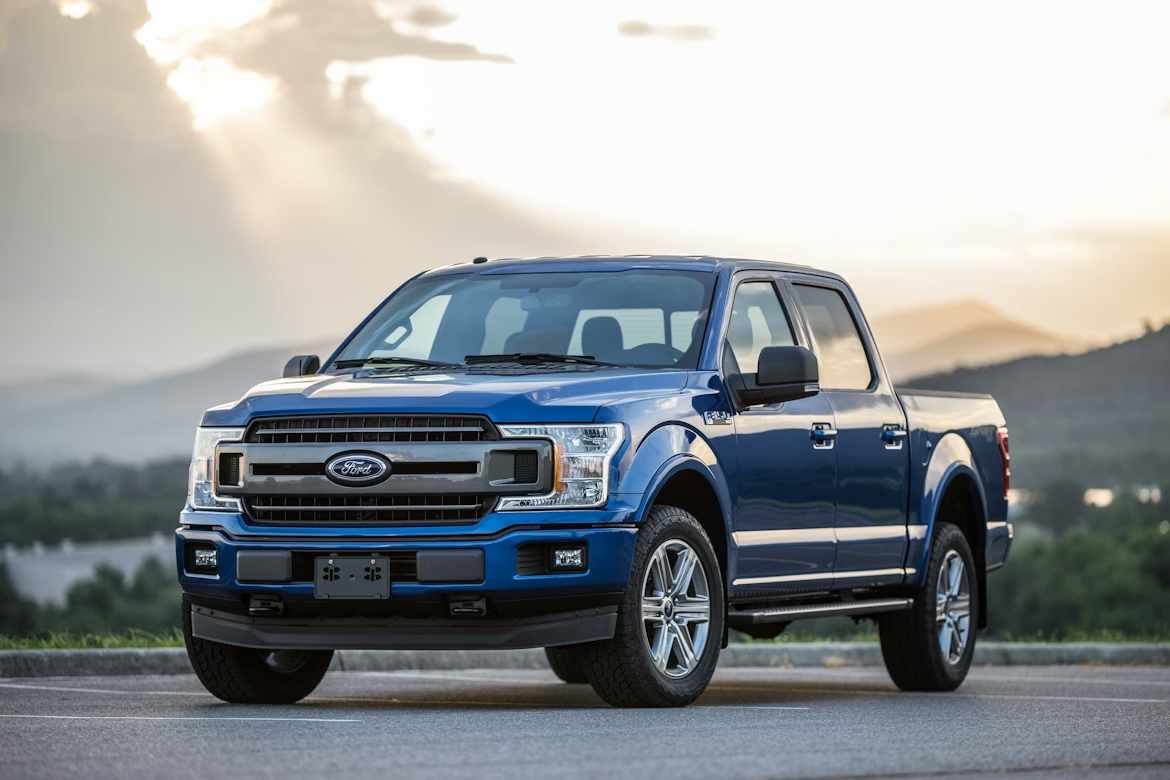
In early 2026, Ford announced discussions with China’s EV and battery giant BYD. The focus is securing batteries for hybrid and plug-in hybrid vehicles rather than full battery-electric models. This collaboration immediately drew attention. Industry analysts note it may influence Ford’s powertrain development and broader electrification strategy.
Market Realities Shape Ford’s Shift
Ford has faced softer-than-expected BEV sales and persistent cost pressures. The company adjusted its strategy, prioritizing sustainable electrification that appeals broadly. Hybrid and plug-in hybrid models continue growing steadily, especially in markets where charging infrastructure is limited. Ford now emphasizes diversification and operational resilience instead of focusing solely on BEVs.
BYD’s Role in Battery Supply
Batteries now dominate EV powertrain costs. BYD offers scale and reliability. Its Blade battery, based on LFP chemistry, provides thermal stability, lower costs, and a strong safety record. BYD’s production footprint and operational data give Ford confidence in consistent supply. This partnership balances cost, performance, and reliability, essential for hybrids targeting mainstream drivers.
Real-World Driving: U.S. vs Europe Hybrid Experiences
In the U.S., many suburban drivers face sparse public DC fast chargers. A hybrid like the Ford plug-in using BYD LFP cells allows short trips purely on electricity, while gasoline assists on longer drives. One driver in Austin, Texas, reported commuting 50 km daily on electric power and traveling 600 km on highways without anxiety about charging.
In Europe, urban users benefit differently. In Berlin, hybrid users navigate city streets using electric range for short errands. On weekends, highway trips to neighboring countries rely on gasoline backup, avoiding range limitations of BEVs. Fleet operators in France also find hybrids practical. Delivery vehicles can maintain tight schedules without depending on fast-charging infrastructure.
These examples highlight the hybrid approach’s real-world advantage: flexible range, reliable energy, and reduced dependency on incomplete charging networks.
Engineering Collaboration and Battery Advantages
Ford’s partnership includes technical coordination on cell performance, thermal management, and module design. BYD has extensive field data from millions of vehicles, providing insights on degradation, cycle life, and temperature effects. This helps Ford maintain reliability without reinventing existing solutions.
LFP batteries may have lower energy density than NMC types, but they excel in safety, cycle life, and cost efficiency. For hybrid applications, these benefits outweigh the marginal reduction in energy density.
Table 1: LFP vs NMC Battery Comparison (Placeholder for data chart)
| Feature | LFP (BYD Blade) | NMC (Nickel Manganese Cobalt) |
|---|---|---|
| Energy Density (Wh/kg) | 160–180 | 200–250 |
| Cycle Life | 3000–4000 | 1500–2000 |
| Thermal Stability | High | Medium |
| Cost per kWh | $90–100 | $140–160 |
| Safety Risk | Low | Medium-High |
Hybrid vs BEV Performance Metrics
The flexibility of hybrid powertrains offers different advantages compared to full BEVs. Hybrids can maintain long-distance range while still providing electric driving benefits for daily commutes.
Table 2: Hybrid vs BEV Performance Comparison (Placeholder for data chart)
| Vehicle Type | Range (km) | 0–100 km/h (s) | Daily Usable Electric Range | Infrastructure Dependency |
|---|---|---|---|---|
| Plug-in Hybrid (Ford/BYD LFP) | 600–1000 total, 200–250 electric | 7.5 | 50–70 km | Low |
| BEV (Tesla/BYD EV) | 400–500 | 5–6 | 400–500 | High (DC fast-charging required) |
These tables can be used in articles or online platforms to help readers visualize key differences in battery chemistry and performance outcomes.
Global Supply and Risk Mitigation
BYD produces batteries in multiple regions, mitigating geopolitical and logistical risks. Multi-regional production ensures flexibility and responsiveness to market demand. Ford benefits from modular vehicle architecture. Battery packs and power electronics integrate across hybrid, plug-in, and full EV platforms. This modularity reduces production risk and increases adaptability for future vehicle generations.
Strategic Implications for Electrification
Ford’s discussions with BYD show a broader trend in the automotive industry. Legacy automakers now balance BEV ambition with supply chain pragmatism. Hybrid and plug-in hybrid models represent a practical bridge for consumers. They provide daily electric benefits while addressing real-world infrastructure gaps. By combining Ford’s platform expertise with BYD’s scalable LFP battery supply, electrified vehicles can remain affordable, reliable, and widely adopted across diverse markets.
This approach demonstrates that electrification is not a one-size-fits-all solution. Flexible strategies like this hybrid-focused collaboration address regional differences, reduce range anxiety, and ensure consistent vehicle performance. For consumers, it translates to reliable, predictable, and practical vehicles that fit real-world needs.