Vehicle safety has evolved far beyond crash-test ratings. In 2026, modern cars combine robust crash protection, advanced driver-assistance systems (ADAS), and intelligent design features to protect occupants and support drivers. However, real-world driving exposes both the strengths and weaknesses of each system. This article evaluates major car brands, analyzing how they perform in actual conditions, the risks drivers may encounter, and where improvements can be made.
Toyota: Reliable Safety with Predictable Intervention
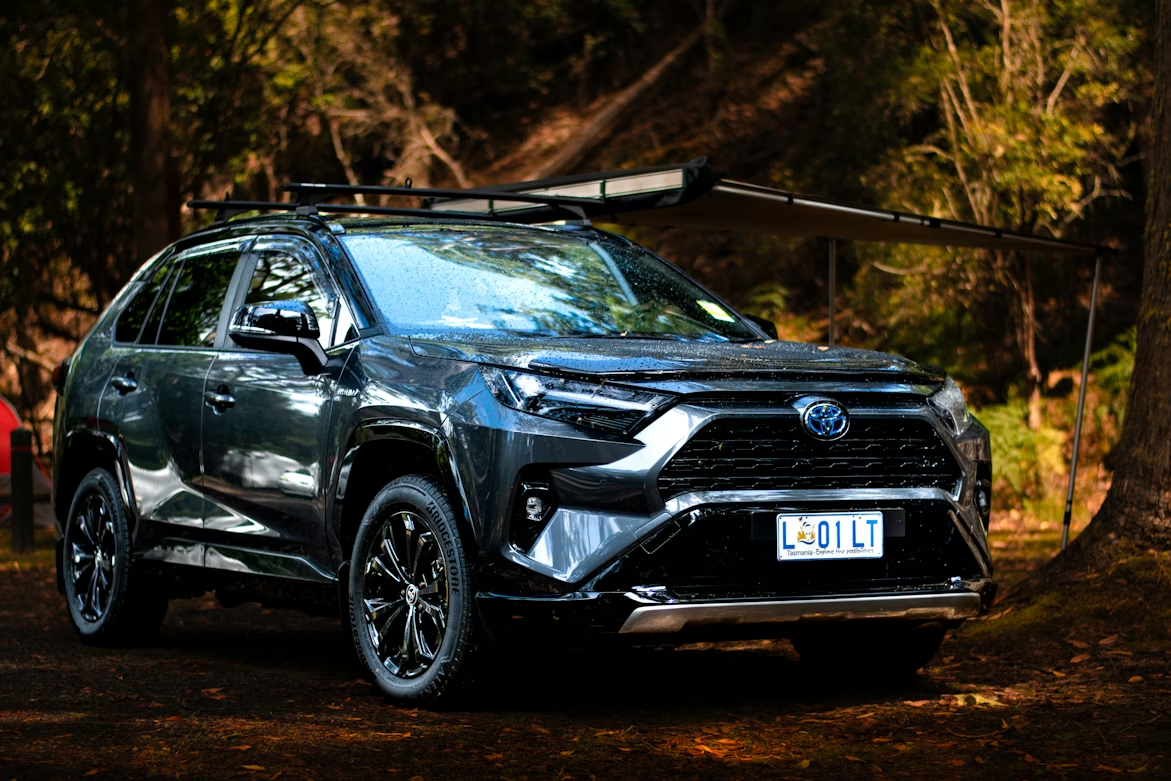
Toyota continues to set high standards for practical, everyday safety. Its Pre-Collision System, Lane Assist, and Adaptive Cruise Control are designed to prevent accidents rather than simply mitigate them. In city driving, Toyota’s ADAS consistently detects vehicles and pedestrians, offering timely warnings and gentle intervention that rarely startles the driver. On highways, the system maintains lane centering and safe following distances, reducing fatigue during long trips.
Potential Risks: Despite its reliability, Toyota’s systems can struggle with sudden cut-ins or erratic behavior from other drivers. In dense urban environments, the Pre-Collision System may not fully compensate for unpredictable traffic, requiring attentive driving.
Improvement Opportunities: Faster hazard recognition and integration of cross-traffic alerts could further enhance urban safety. Expanding pedestrian and cyclist detection at higher speeds would reduce residual risk.
Real-World Example: In Los Angeles (2025), a Toyota Camry equipped with Safety Sense avoided a low-speed collision when a distracted driver abruptly merged into its lane, demonstrating the system’s practical utility.
Personal Insight: Toyota strikes a balance between proactive intervention and driver control, making it one of the most dependable choices for families and everyday commuting.
Volvo: Human-Centric Safety Leadership
Volvo’s reputation for safety is unmatched, combining crashworthiness with advanced ADAS. Pilot Assist, Collision Avoidance, and Pedestrian Detection create a multi-layered defense system. On highways, Pilot Assist maintains precise lane centering, while collision avoidance systems actively brake to prevent accidents. In urban traffic, pedestrian and cyclist detection works consistently, even under low-light conditions.
Potential Risks: Volvo’s conservative approach can sometimes feel overly cautious during rapid lane changes or evasive maneuvers. Complex weather conditions, such as heavy snow, occasionally trigger false alerts, which can distract drivers.
Improvement Opportunities: Faster calibration in adverse conditions and adaptive alert intensity would enhance confidence without reducing safety. Broader integration of cross-traffic and intersection assistance would further reduce urban accident risk.
Real-World Example: A Volvo XC90 in Stockholm (2024) successfully avoided a collision with a cyclist who suddenly swerved into the vehicle’s path, showcasing Volvo’s strong urban safety systems.
Personal Insight: Volvo’s systems feel natural, creating trust without intruding on the driving experience. The combination of structural protection and intelligent ADAS makes it ideal for urban and highway safety-conscious drivers.
Tesla: Advanced Technology with Attention Demands
Tesla emphasizes software-driven safety through Autopilot and Full Self-Driving (FSD). On highways, Tesla’s ADAS reduces fatigue, maintains lane positioning, and can prevent collisions with vehicles ahead. Emergency braking and obstacle detection provide additional layers of protection, particularly during high-speed driving.
Potential Risks: Tesla’s reliance on software can sometimes generate false positives or miss stationary hazards in urban environments. Overreliance by drivers remains a concern, especially for inexperienced users who may trust the system too much.
Improvement Opportunities: Enhanced urban detection, clearer driver attention alerts, and improved low-speed obstacle recognition would mitigate risk. Continuous software updates are already helping, but careful scenario testing remains essential.
Real-World Example: In Florida (2025), a Tesla Model 3 engaged automatic braking due to a false detection, resulting in a minor rear-end bump. While no injuries occurred, the incident highlighted the need for better urban hazard calibration.
Personal Insight: Tesla offers cutting-edge technology and proactive safety, but it requires driver supervision to be fully effective. For tech-savvy buyers, its system provides excellent highway safety, yet city conditions still demand caution.
Honda: Balanced, Intuitive Safety
Honda’s Sensing suite, including Collision Mitigation, Lane-Keeping, and Road Departure systems, provides predictable and understandable interventions. Drivers quickly learn to trust the system, as alerts are intuitive and braking responses are smooth. In mixed city and highway scenarios, Honda maintains reliable detection of vehicles, pedestrians, and lane markings.
Potential Risks: Hybrid traffic situations with merging vehicles at high speeds can challenge the system’s response time. Pedestrian detection is strong but slightly less advanced than premium competitors.
Improvement Opportunities: Enhancing predictive hazard detection and integrating cross-traffic alerts at intersections would increase urban effectiveness. Adaptive acceleration response could further improve safety in complex traffic.
Real-World Example: In Chicago (2025), a Honda Accord successfully avoided a collision with a merging SUV using adaptive cruise and pre-collision braking.
Personal Insight: Honda’s safety approach is balanced and low-stress, suitable for families and drivers seeking intuitive, reliable protection without overwhelming complexity.
BMW: Subtle Safety with Optional Enhancements
BMW focuses on driver engagement while integrating safety features through Active Driving Assistant Pro and Lane Assist. The interventions are smooth and minimally intrusive, maintaining the driving experience for premium users. Highway monitoring and high-speed collision mitigation are particularly strong, thanks to precise radar and camera fusion.
Potential Risks: Standard models often lack the full suite of ADAS, leaving safety reliant on driver vigilance. In low-speed urban traffic, hazard detection may not be as proactive as in other brands.
Improvement Opportunities: Making critical ADAS standard across more models, and improving low-speed hazard recognition, would reduce residual risk. Additional urban scenario training could enhance consistency.
Real-World Example: A BMW 3 Series in Germany (2024) reduced the severity of a highway collision by alerting the driver and partially braking before impact.
Personal Insight: BMW balances safety and driver enjoyment, but users must carefully select optional packages to achieve maximum protection.
Subaru: Consistently Proactive Safety
Subaru’s EyeSight Driver Assist combines pre-collision braking, lane-keeping, and adaptive cruise into a cohesive system. Interventions are smooth, predictable, and reliable, reducing driver fatigue during long commutes or highway drives. Subaru’s vehicles excel in providing confidence across diverse driving scenarios.
Potential Risks: Lane centering can struggle on poorly marked roads, and adverse weather conditions may slightly reduce radar and camera effectiveness. Drivers should remain attentive in snow or heavy fog.
Improvement Opportunities: Improved sensor fusion for adverse weather and optional aggressive intervention modes would enhance performance in critical urban scenarios.
Real-World Example: A Subaru Outback in Seattle (2025) prevented a crash with a merging truck, maintaining stable control and smooth braking.
Personal Insight: Subaru’s consistent performance makes it one of the most dependable choices for real-world safety, especially for families and daily commuters.
Comparative Safety Table
| Brand | Crash-Test Rating | Key ADAS Features | Real-World Incident | Strengths | Potential Risks | Suggested Improvements |
|---|---|---|---|---|---|---|
| Toyota | 5/5 | Pre-Collision, Lane Assist, Adaptive Cruise | 2025 Camry avoided collision in LA | Smooth, predictable interventions | Urban cut-ins may exceed reaction | Faster hazard recognition, cross-traffic alerts |
| Volvo | 5/5 | Pilot Assist, Collision Avoidance, Pedestrian Detection | XC90 avoided cyclist in Stockholm | Excellent pedestrian/cyclist detection | Conservative in evasive maneuvers | Better low-light and snow calibration |
| Tesla | 5/5 | Autopilot, FSD, Auto Braking | Model 3 minor rear-end bump FL | Advanced highway safety | Overreliance on software, urban challenges | Enhanced urban detection, clearer driver alerts |
| Honda | 5/5 | Collision Mitigation, Lane-Keeping | Accord avoided merging SUV in Chicago | Intuitive and predictable | Slight lag in mixed traffic | Better predictive hazard detection |
| BMW | 4.5/5 | Active Driving Assistant Pro, Lane Assist | 3 Series reduced collision severity DE | Smooth, non-intrusive | Optional ADAS may be required | Standardize ADAS, improve urban hazard detection |
| Subaru | 5/5 | EyeSight, Pre-Collision Braking, Lane-Keeping | Outback prevented merging truck crash in Seattle | Reliable and consistent | Lane centering on poor markings | Better sensor fusion for adverse weather |
Key Takeaways
- Safety is multi-dimensional: Crash-test scores, ADAS reliability, and real-world usability all matter.
- Every brand has strengths and weaknesses: Understanding potential risks allows smarter choices.
- Improvement areas are actionable: Sensor fusion, urban hazard detection, and software updates can close remaining gaps.
For 2026 buyers, evaluating safety means looking beyond numbers to real-world performance, risk exposure, and system consistency. Scheduling test drives and observing ADAS behavior in daily conditions is crucial to find a car that truly protects you and your passengers.