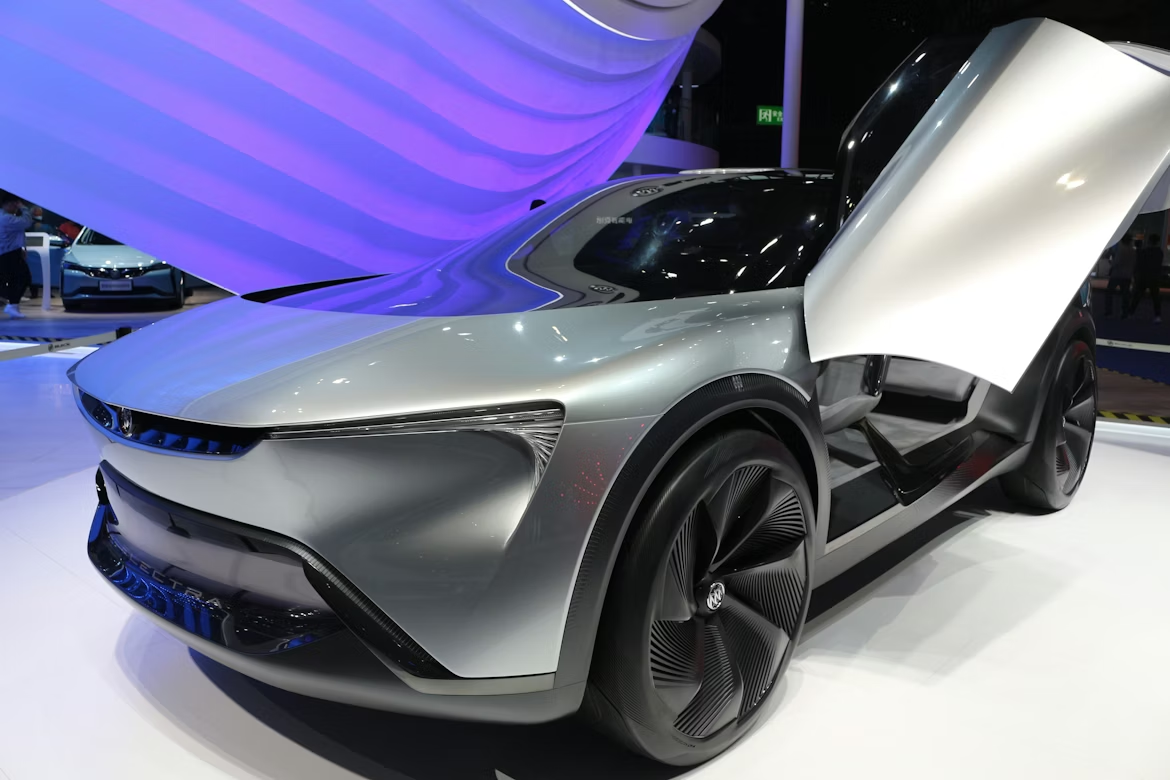
When Buick announced the upcoming Electra E7 plug-in hybrid SUV in early 2026, auto enthusiasts and industry analysts started asking a crucial question: Can it challenge Tesla and BYD, the leaders in electric vehicles? At first glance, this may seem ambitious. However, a closer look at the E7’s specifications, real-world use cases, and market positioning reveals its potential and the challenges it faces.
The Electra E7 uses Buick’s Xiaoyao fusion architecture, combining a 1.5-liter turbocharged engine with a 165 kW electric motor and an LFP (lithium iron phosphate) battery. Under China’s CLTC cycle, the SUV achieves over 210 km of pure electric range and a total range exceeding 1,600 km when using both engine and battery. These figures translate to more than 1,000 miles, giving the E7 strong versatility for urban commuting, highway trips, and weekend getaways. Unlike Tesla’s fully electric Model Y or BYD’s e7 sedan, the E7 blends electric drive with a combustion engine. This design appeals to regions where charging infrastructure remains inconsistent. Hybrid drivers can enjoy electric-only trips for short commutes while relying on gasoline for longer drives. Buick deliberately positions the E7 as a practical solution rather than a purely zero-emission alternative.
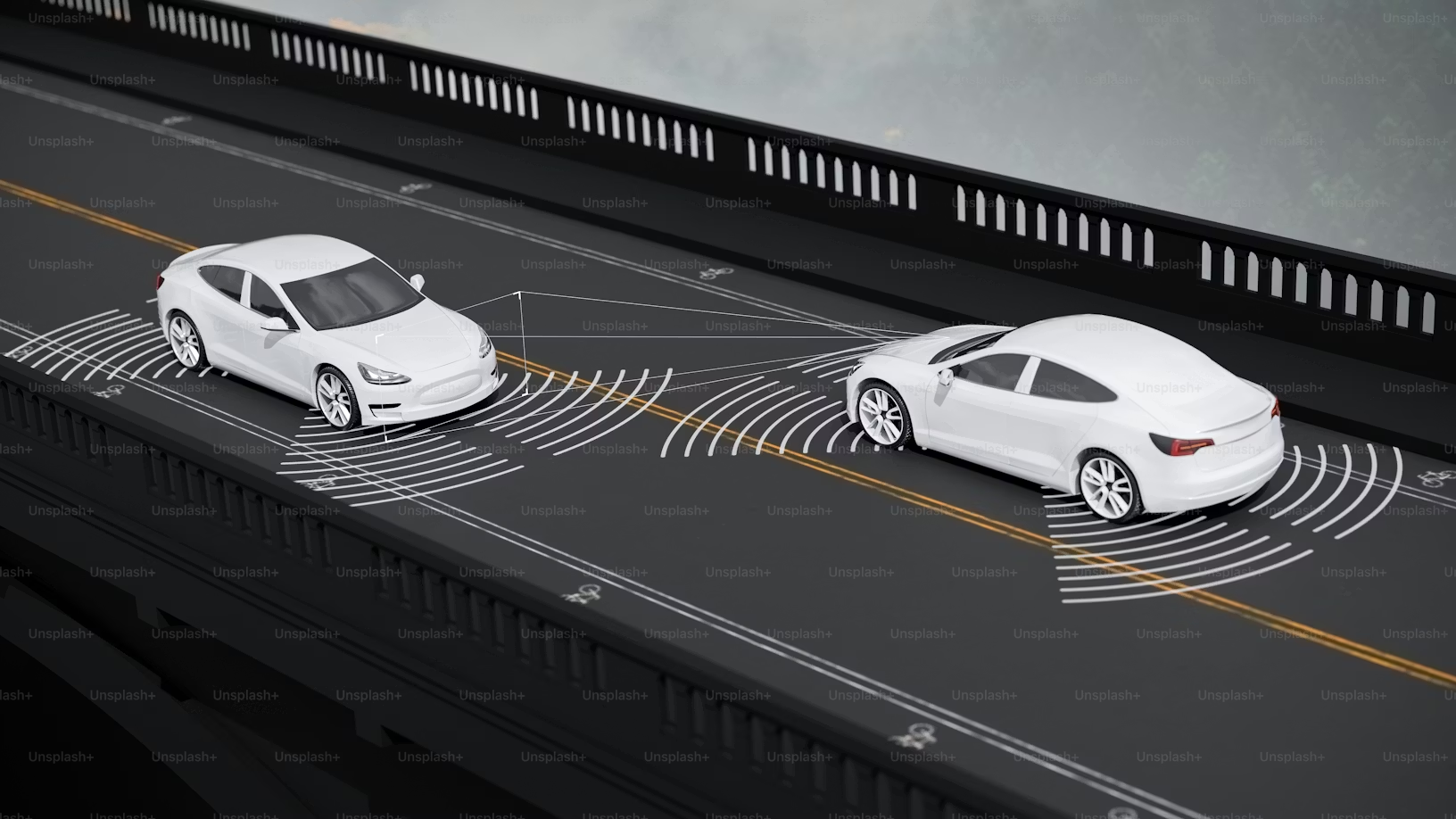
Buick equips the Electra E7 with roof-mounted LiDAR and an advanced driver-assistance system developed with Momenta. Its cockpit integrates a Snapdragon-powered infotainment system that supports intelligent connectivity and OTA updates. The suspension uses continuously variable damping to scan road surfaces and adjust in real time, enhancing comfort on city streets and highways alike. These features position the E7 as a technology-rich hybrid SUV, targeting buyers who value both innovation and practicality. Tesla still leads in software integration and charging network. Autopilot and Full Self-Driving updates enhance user experience continuously. BYD’s vehicles increasingly offer advanced ADAS features and intelligent cabin integration at competitive prices. The Electra E7 faces strong competition in software and ecosystem maturity.
The Electra E7 may sit between Tesla’s premium offerings and BYD’s cost-effective EVs. BYD’s e7 sedan costs around $14,400–$16,000, providing remarkable range and fast-charging at an affordable price. Tesla’s vehicles occupy a higher price tier, emphasizing brand reputation, performance, and Supercharger access. Buick can attract buyers seeking hybrid versatility with smart features without paying Tesla-level premiums. The E7 also targets consumers concerned about charging access and range anxiety. Families, young professionals, and fleet users could benefit from its hybrid flexibility. In markets with limited DC fast chargers, the E7 offers a bridge between traditional ICE vehicles and fully electric solutions.
Buick’s hybrid-focused strategy shows a pragmatic approach to electrification. While it cannot match Tesla’s BEV dominance or BYD’s pure electric affordability, it addresses real-world limitations. The E7 offers a balance of electric driving, technology, and convenience that may appeal to specific buyer segments. Its hybrid architecture provides a practical pathway for drivers transitioning to electrification while still enjoying comfort, range, and modern technology.
The Electra E7 is unlikely to surpass Tesla or BYD in absolute sales or BEV technology leadership. However, it presents a compelling alternative that fits the needs of many drivers today. By blending hybrid efficiency, advanced smart technology, and flexible daily usability, the E7 demonstrates that electrification can follow multiple paths. Its success will depend on market execution, consumer perception, and how effectively Buick leverages technology to differentiate the vehicle in an increasingly crowded EV market.