Consumers choosing between pure electric vehicles (BEVs) and hybrid powertrains face a decision that goes far beyond environmental headlines. In real-world use, the differences between these systems play out across daily commuting, long-distance travel, energy costs, climate effects, infrastructure availability, and long-term ownership. To bring clarity to the debate, this article benchmarks specific vehicles representing each camp, including the Tesla Model 3, Hyundai Ioniq 5, Toyota Prius Hybrid, Honda CR-V Hybrid, and the Toyota RAV4 Prime plug-in hybrid. Real driving scenarios and technical insights illustrate how each choice performs under the demands of modern life.
How the Powertrains Function in Everyday Use
A pure electric vehicle like the Tesla Model 3 or Hyundai Ioniq 5 stores electrical energy in a high-voltage battery pack and uses electric motors to deliver instant torque with seamless acceleration. There is no internal combustion engine, which simplifies drivetrain components and reduces mechanical complexity. In contrast, hybrid vehicles such as the Toyota Prius or Honda CR-V Hybrid combine a gasoline engine with one or more electric motors and a smaller battery. The Toyota RAV4 Prime plug-in hybrid expands this further, offering a larger traction battery that can handle short distances on electricity alone before switching to hybrid mode.
These architectural differences influence how vehicles behave on the road. In city environments, BEVs shine with regenerative braking and one-pedal driving that reduces wear on traditional brake components. Hybrids still draw on the engine frequently in urban stop-and-go traffic, though they cleverly blend electric assist to improve efficiency over conventional internal combustion.
Daily Commuting: Quiet Efficiency vs Fuel Flexibility
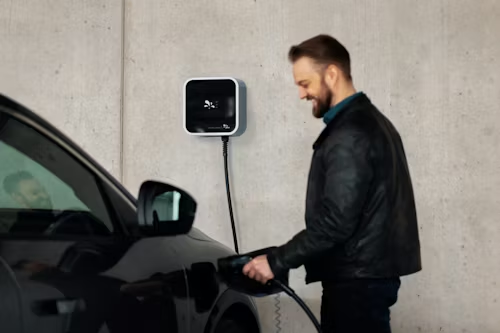
For routine city commutes, a BEV like the Tesla Model 3 Standard Range or Ioniq 5 SE feels almost effortless to operate. Plugging into a Level 2 charger at home overnight ensures a full battery each morning, and regenerative braking recovers energy that would otherwise be lost. Over several weeks of city driving, most Model 3 owners report minimal engine noise and very smooth low-speed performance, even in heavy traffic.
Hybrids such as the Toyota Prius also reduce fuel use through electric assist, but combustion engine engagement remains frequent, especially during longer idling periods or under load. The hybrid drivetrain in the Prius carries less instantaneous torque than a BEV, so acceleration feels more graduated. The convenience of not requiring home charging makes hybrids appealing for drivers in apartments or areas with limited charging access, but the tradeoff lies in a more traditional driving experience.
Highway and Long-Distance Travel
In highway cruising, pure EVs and hybrids take distinctly different approaches to energy use. The Hyundai Ioniq 5 AWD performs strongly at sustained higher speeds, with consistent acceleration and cabin refinement that rival many gasoline cars. On a 200-mile highway test, the Ioniq 5 maintained stable energy consumption, and access to a DC fast-charging network allowed quick stops to replenish range without significant travel disruption.
In contrast, the Toyota RAV4 Prime behaves like a conventional SUV beyond its electric range. Once the ~42 miles of battery-only operation are expended, the vehicle switches to hybrid mode. This yields excellent long-trip flexibility; a quick stop at a gas station refills the tank in minutes, a stark difference from planning around DC fast chargers for BEVs. Families with frequent long highway journeys often cite this as a decisive convenience advantage for plug-in or standard hybrids.
Energy Efficiency and Real-World Operating Cost
Energy cost per mile remains a central factor in powertrain comparisons. Pure EVs benefit from high drivetrain efficiency and lower per-mile energy costs. Charging the Tesla Model 3 Long Range at home overnight often costs less than filling a tank in a hybrid or plug-in hybrid. Regenerative systems in BEVs also maximize energy recapture during urban driving, further reducing net consumption.
By contrast, hybrid vehicles like the Honda CR-V Hybrid improve fuel economy compared with traditional gasoline SUVs, yet they cannot match a BEV’s energy efficiency. When benchmarked on a mixed city–highway cycle, the Model 3 and Ioniq 5 consistently show lower energy cost per mile, while hybrids present moderate savings compared with gasoline-only SUVs.
Weather, Climate, and Seasonal Behavior
Climate conditions reveal additional differences. Cold temperatures often reduce electric range in BEVs, as batteries demand energy for cabin heating and internal chemistry slows. During a winter test drive in sub-freezing conditions, the Ioniq 5 showed a notable drop in range until the battery warmed, while the RAV4 Prime and CR-V Hybrid maintained predictable distance thanks to internal-combustion support.
In hot climates, both BEVs and hybrids manage thermal loads through targeted cooling systems. EVs must balance battery cooling with cabin comfort, which can increase energy use during long highway stretches. Hybrids distribute thermal management between the engine and battery system, keeping interior comfort consistent but at higher overall fuel consumption.
Infrastructure Reality: Charging Access and Fueling Convenience
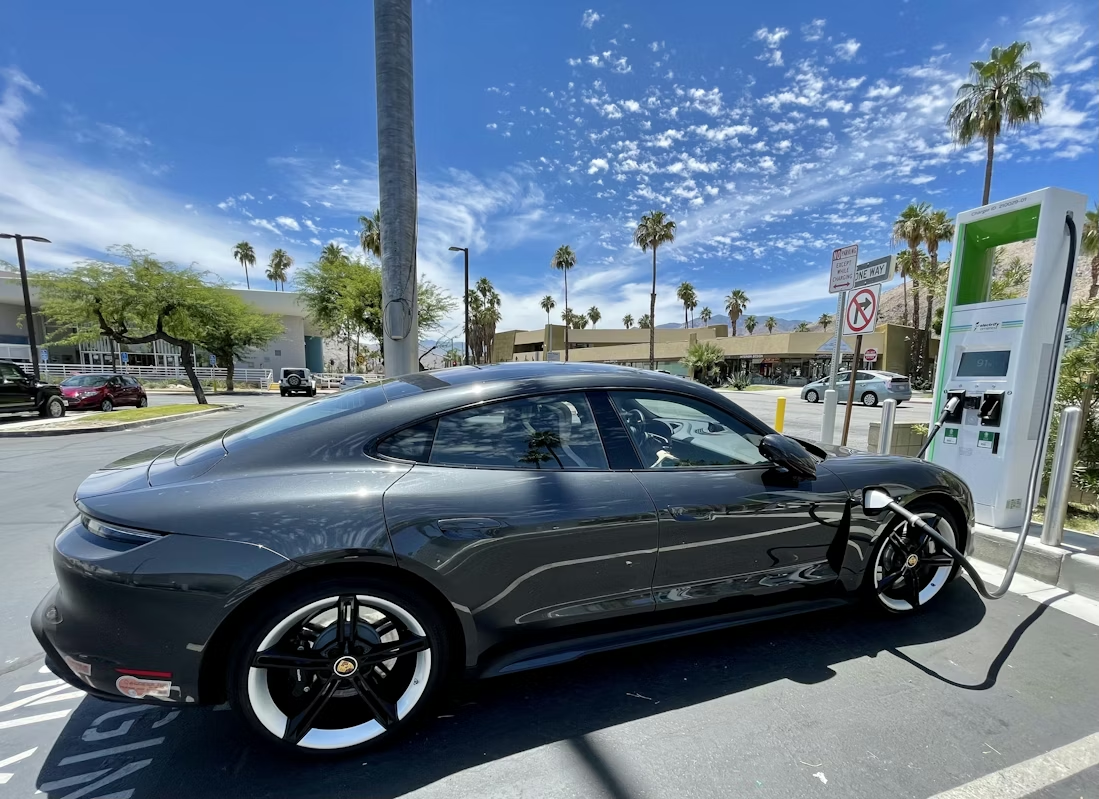
Charging infrastructure continues to grow rapidly for BEVs, with fast chargers becoming more prevalent along major corridors and in urban centers. The Tesla Supercharger network, in particular, offers seamless high-power access for Model 3 owners. Public chargers and home charging together create a flexible energy landscape, especially for daily commuting and occasional long trips.
Hybrids and plug-in hybrids retain the convenience advantage of ubiquitous gas stations. For drivers in regions with limited public chargers or apartment parking without dedicated outlets, a hybrid remains a pragmatic choice. Scheduling a long trip in a BEV still requires planning around charger availability, whereas plugging in at a hotel outlet or visiting a gas station feels familiar and immediate for hybrid owners.
Driving Feel and User Experience
Driving dynamics also vary by powertrain. BEVs like the Model 3 Performance deliver immediate torque and linear power delivery that feel engaging at any speed. Acceleration is quiet and smooth, giving a connected feel to the road. Suspension tuning on EV platforms often compensates for battery weight by lowering the center of gravity, giving confident handling even in spirited driving.
Hybrids such as the Prius or CR-V Hybrid focus more on comfort and predictability. Acceleration from stop to highway speed is efficient but more muted, reflecting a design emphasis on economy rather than excitement. The RAV4 Prime, with its heavier battery and all-wheel-drive configuration, introduces a hybrid that feels more purposeful and balanced, but still lacks the immediate thrust of a pure BEV.
Long-Term Ownership and Lifecycle Considerations
Battery longevity and maintenance costs weigh heavily in ownership decisions. Modern BEVs incorporate sophisticated battery management and thermal systems that stabilize performance over hundreds of charging cycles. Long-term real-world data for vehicles like the Tesla Model 3 shows mild degradation after five years of mixed use, especially with moderate fast-charging patterns.
Hybrids combine battery aging with engine wear and traditional maintenance items such as oil changes and filters. While hybrid servicing remains largely familiar to dealerships, the complexity of two power systems introduces additional points of potential expense.
Regulatory environments and resale trends also influence ownership value. Zero-emission zones and tax incentives favor BEVs in many urban regions, while hybrids maintain broad eligibility for incentives in markets with slower EV adoption.
Fitting Your Powertrain to Your Real Life
At the end of the day, the powertrain choice comes down to how you actually drive. A young professional with reliable home charging and urban commuting needs might find a Tesla Model 3 or Hyundai Ioniq 5 delivers the lowest cost and highest satisfaction. A family living in a suburban neighborhood without dedicated charging access but with frequent long trips and flexibility wants might gravitate toward a Toyota RAV4 Prime or Honda CR-V Hybrid for peace of mind.
Drivers who value quiet, instantaneous acceleration and want to reduce operating costs may prefer a pure electric setup. Those who prioritize flexibility, minimal behavioral adjustment, and seamless refueling may find a hybrid or plug-in hybrid better aligned with everyday living.
The optimal choice depends not on the specifications in isolation, but on how a vehicle integrates into your routines, your environment, and your expectations. Scheduling test drives in both pure electric and hybrid models — ideally over multiple scenarios including city streets, highways, and local errands — remains the best way to discover which powertrain resonates with your real‒world driving life.
As electrification reshapes the global automotive market, many buyers face a practical question rather than a philosophical one: should the next car be a pure electric vehicle (BEV) or a hybrid (HEV / PHEV)? Both promise lower emissions, improved efficiency, and advanced technology, yet they behave very differently in daily use. The real answer depends less on marketing claims and more on how the vehicle fits into real-world driving patterns such as commuting, long-distance travel, charging access, climate conditions, and long-term ownership costs.
Understanding these differences helps drivers choose a powertrain that truly matches their lifestyle instead of chasing headline specifications.
How Pure Electric and Hybrid Powertrains Actually Work
A pure electric vehicle stores energy entirely in a high-voltage battery pack and uses one or more electric motors for propulsion. Energy flows directly from the battery through the inverter to the motor, producing instant torque and smooth acceleration. There is no internal combustion engine, no fuel tank, and far fewer moving parts.
A hybrid vehicle combines an internal combustion engine with an electric motor and a smaller battery. In a conventional hybrid, the engine and motor cooperate dynamically to optimize fuel efficiency. In a plug-in hybrid, the vehicle can drive short distances on electricity alone before switching to hybrid operation. Energy management software continuously decides how to blend engine power, regenerative braking, and battery usage.
This architectural difference defines everything from efficiency to maintenance behavior.
Daily Commuting: Quiet Efficiency vs Flexible Convenience
For urban and suburban commuting, pure electric vehicles excel when charging access is stable. Drivers who can charge at home or at work benefit from predictable energy costs, minimal daily effort, and a consistent driving experience. Plugging in overnight feels similar to charging a phone, and each morning begins with a full range buffer. Stop-and-go traffic favors EVs because regenerative braking recovers energy instead of wasting it as heat.
Hybrids offer flexibility when charging infrastructure is inconsistent. A hybrid driver never worries about range or charger availability. Even in heavy traffic, the electric motor assists the engine and reduces fuel consumption. However, the daily experience still includes refueling visits, engine warm-up cycles, and higher mechanical complexity.
In dense cities with good charging coverage, BEVs often feel simpler and more relaxing. In regions where charging access remains limited, hybrids provide reassurance without changing driving habits.
Highway Driving and Long Trips: Range Planning vs Refueling Speed
Long-distance travel highlights the biggest behavioral difference between these powertrains. A hybrid behaves almost exactly like a conventional gasoline vehicle on highways. Refueling takes minutes, and range typically exceeds 500 miles depending on tank size and efficiency. Drivers rarely need to adjust travel planning.
A pure electric vehicle requires charging strategy awareness. Fast-charging networks have expanded rapidly, and modern EVs can add significant range in 20–40 minutes. Still, charging speed depends on station power, battery temperature, and vehicle architecture. Drivers must plan stops, especially in cold weather or remote regions.
For families or business users who frequently drive long highway routes, hybrids remain the most seamless solution today. For drivers whose long trips are occasional and predictable, EV fast charging has become increasingly manageable.
Energy Efficiency and Operating Cost in Real Conditions
Pure electric vehicles convert a much higher percentage of energy into motion compared with hybrids. Electricity travels directly into the battery and motor with relatively low losses. Hybrids lose efficiency through fuel combustion, thermal losses, and mechanical transmission.
In most markets, electricity costs per mile remain lower than gasoline costs per mile, especially when home charging is available. Hybrids reduce fuel consumption significantly compared with conventional cars, but they cannot match the operating efficiency of BEVs in urban cycles.
The following table illustrates a simplified real-world comparison for typical mid-size vehicles under mixed driving conditions.
| Metric | Pure Electric Vehicle | Hybrid Vehicle |
|---|---|---|
| Energy Cost per 100 km | $3–6 (home charging) | $6–10 (fuel) |
| Urban Efficiency | Very high due to regen | High |
| Highway Efficiency | Moderate | High |
| Maintenance Complexity | Low | Medium |
| Drivetrain Components | Motor, inverter, battery | Engine, motor, transmission, battery |
Actual numbers vary by region and energy prices, but the efficiency trend remains consistent.
Climate and Seasonal Impact on Performance
Weather influences both powertrains differently. Cold temperatures reduce battery efficiency and usable range in EVs due to chemical behavior and cabin heating demand. Range drops of 10–30 percent are common in winter climates, especially for shorter trips where the cabin must warm repeatedly.
Hybrids experience smaller seasonal efficiency changes because the engine generates waste heat for cabin warming and maintains consistent fuel performance. However, short trips may reduce hybrid efficiency if the engine runs frequently before reaching optimal temperature.
In hot climates, EV thermal management systems consume energy for cooling but remain stable overall. Hybrids manage engine heat alongside battery cooling, adding system complexity.
Drivers in extreme climates must weigh how temperature affects daily reliability and range confidence.
Driving Feel and User Experience
Pure electric vehicles deliver immediate torque with smooth, silent acceleration. This creates a calm yet responsive driving experience, particularly in urban environments. One-pedal driving reduces brake wear and simplifies control. Cabin noise is minimal at low speeds.
Hybrids feel familiar to traditional drivers. Engine noise, gear transitions, and refueling patterns remain part of the experience. Modern hybrids are extremely refined, yet they cannot match the seamless torque delivery of full EVs at low speeds.
For drivers who value quietness and smoothness, BEVs feel more advanced. For drivers who prefer mechanical familiarity and predictable refueling, hybrids feel more intuitive.
Charging and Refueling Infrastructure Reality
Charging access determines the practicality of EV ownership more than any technical specification. Home charging transforms EV ownership into a convenience advantage. Public fast charging is expanding quickly but remains uneven by region.
Hybrid refueling relies on existing fuel infrastructure, which remains globally mature and consistent. No behavioral changes are required.
Urban homeowners or apartment complexes with charging support benefit strongly from EV adoption. Rural or infrastructure-limited regions still favor hybrids.
Long-Term Ownership and Resale Considerations
Battery longevity, software updates, and residual value shape long-term ownership. EV batteries degrade gradually, but modern thermal management and chemistry improvements have stabilized long-term performance. Over-the-air updates can improve efficiency and features without dealership visits.
Hybrids combine battery aging with engine wear, increasing long-term complexity. However, resale markets remain strong due to widespread familiarity and fueling convenience.
Regulatory policies, emissions zones, and fuel taxation may increasingly favor EVs over time, influencing resale trends.
Which Powertrain Makes Sense for You?
Choosing between a pure electric vehicle and a hybrid depends on lifestyle rather than technology hype. Drivers with reliable charging access, predictable commuting patterns, and interest in lower operating costs benefit strongly from BEVs. Drivers who travel long distances frequently, live in charging-limited regions, or prioritize refueling speed may find hybrids more practical today.
As charging infrastructure expands and battery technology continues to improve, the balance will gradually shift toward pure electric platforms. Until then, hybrids remain a valuable transitional solution for many real-world users.
The smartest decision comes from evaluating how you actually drive rather than how a vehicle looks on paper. A test drive in both powertrains, combined with realistic energy cost calculations and infrastructure mapping, often reveals the best personal fit.